- Credit classes meet five hours each day for the entire five-week program. You must be in attendance for the entire session in order to receive credit. Students attending for just one session do not qualify for credit, and will take courses for enrichment only.
- Upon successful completion of the course you enroll in, Cushing will award you a full year’s academic credit. To transfer earned credit to another school, please make prior arrangements with that institution and Cushing Summer. Accepting earned credit from Cushing Summer is the sole discretion of the awarding institution. If your goal is to transfer earned credit to another school, it is important to make these arrangements prior to registering for a credit-bearing class.
- Students who may not need credit at this point in their academic journey can still take credit classes for review, preview (to prepare for honors or AP level classes), or personal interest and enrichment.
- All international students enrolled in a credit class will need to enter the country on an F-1 student visa. We will send you an I-20 form to obtain the F1 visa. Use the form to obtain your F-1 Student Visa from the U.S. Consulate. We recommend that you make an appointment with the Consulate as soon as possible after receiving your I-20 form.
The Academic Program at Cushing Summer is designed to spark curiosity, develop skills, and build confidence for academic success. Our engaging classes and activities give you the chance to craft a summer of exploration and excitement.
Spark Your Curiosity, And Get Ahead This Summer
Our Academic Program allows students to develop a fun, interesting, and dynamic summer experience of their design. Rising high-school students enroll in one academic course in the morning — for credit or enrichment — and two enrichment options in the afternoon. (Afternoon programming includes visual and performing arts offerings, athletics, as well as additional academic classes). The result: a summer of curiosity and adventure.
INQUIRE TODAY APPLY NOW
High School Courses (Grades 9-12)
Students entering grades 9-12 enroll in one college preparatory or Academy course in the morning. Most high school courses may be taken for credit or enrichment. In order to qualify for credit, a student must be enrolled for the full summer (Sessions 1 and 2).
Receiving Credit for a Cushing Summer Course
Below is our 2026 listing of courses available for students entering grades 9-12.
Morning Courses: Humanities + Social Science
Business, Finance, and Economics
In this comprehensive course designed for the young entrepreneur, students will examine real-world business models, recognize and research opportunities, and engage in the step-by-step process of building, marketing, and sustaining a successful enterprise based on an original idea. Along the way, students become familiar with the world of finance, including the banking system, the monetary system, the loanable funds market, and the various financial assets. An in-depth study of the basic principles of business economics accompanies this course, including the concepts of supply and demand, optimal output, profit maximization, and economies of scale. The class culminates with student presentations of business proposals to peers and faculty. This class is ideal for students considering a career in business, marketing, finance, or economics.
(Available for Enrichment Only)
English: Responding to Literature Through Critical + Creative Writing
Perhaps no other skill is as important to your academic and professional success as writing. This course pays close attention to the writing process as well as to the different kinds of writing that allow you to stretch your mind and talents. The course draws upon a variety of acclaimed short stories, poems, essays, and novels to illustrate various genres of writing for different purposes. After reading and discussing these works, you engage in expressive writing that comes from personal experience. You then turn to an extensive study and practice of the different kinds of expository writing (e.g., definition, classification, illustration, comparison and contrast, argumentation, and critical analysis). Frequent in- and out-of-class essays build your ease and effectiveness as a writer. You will also explore the world of writing by composing original work in any of the creative forms that appeal to you, including fiction, poetry, and drama. By course end, you will have built a portfolio of your writing.
Global Leadership
In this course, students will explore and examine critical global issues unfolding in real time. Topics will include economics and trade, universal human rights, war and conflict, migration and resettlement, environmental treaties and challenges, and access to education, health care, and proper nutrition. In addition, this course will examine the role of the United Nations, nongovernmental organizations, and the global business sector. Using a multi-media approach, students will come to understand the interconnectedness and complexities of these global issues and work to develop practical, ethical, and innovative solutions to some of the most challenging problems on the world stage.
(Available for Enrichment Only)
History: United States History
Over 500 years in the making, the United States of America was created by a wide diversity of people from around the world, perhaps including your distant or recent ancestors. In this class you will examine the emergence of a multi-racial, multi-ethnic society in British North America, beginning with the pattern of colonial settlement and the development of American culture. You will investigate the causes of the American Revolution, the process of writing and ratifying the Constitution, and the development of a two-party system of government. The major political, economic, social, and cultural forces that shaped America from the early 19th to the early 20th century are explored in depth. This intensive historical survey concludes by touching on the emergence of the United States as a world power from 1898 through two World Wars, the Vietnam conflict, and the end of the Cold War. Materials include a textbook augmented by secondary works, films, guest speakers, original source materials, and class trips to historic sites in New England.
Psychology 101: The Science of Us
This course introduces students to the systematic and scientific study of human behavior and mental processes. Covering the major subfields of psychology, students explore topics such as perception, communication, learning, memory, decision-making, persuasion, emotions, biopsychology, the self, and social behavior. Students engage actively through psychological research, oral presentations, project-based learning, and roundtable discussions. The course emphasizes not only the fundamentals of psychology but also self-awareness, understanding others, and social-emotional learning techniques such as mindfulness. By the end of the course, students will gain a deeper understanding of psychology and practical tools for personal growth and interpersonal success.
Morning Courses: Mathematics
Algebra I
Introductory high school mathematics course designed to strengthen students' foundational algebraic and problem-solving skills. The course covers key topics, including: linear equations and inequalities; lines, distances, and slopes; exponents and powers; quadratic functions; systems of equations: absolute value. This course provides a solid mathematical foundation, preparing students for more advanced high school math courses and real-world problem-solving.
Algebra II
If you are in transition to higher-level math, enrolling in Algebra II is an excellent choice for the summer. Topics investigated in this course include linear relations, quadratic functions, exponents, and logarithms and their applications. Successful completion of both Algebra I and Geometry is a prerequisite.
Geometry
In this intensive course, you will solidify your understanding of the properties of two and three-dimensional figures. Working with visual perceptions of three-dimensional figures, you will develop skills for using deductive reasoning as a primary problem-solving tool. Some of the topics covered include parallel lines and planes; properties of triangles, quadrilaterals, and circles; congruent and similar triangles, area of polygons; trigonometry; and coordinate geometry. Successful completion of Algebra I is a prerequisite for enrolling in this course.
Precalculus
In this Precalculus course you will not only review important concepts from algebra, geometry, and basic trigonometry, but you will also explore how they interconnect and pave the way for delving into higher-level mathematics. Topics covered in this course include functions (linear, polynomial, rational, exponential, logarithmic) and their graphs, trigonometric functions, conic sections, and systems of equations. Successful completion of Algebra I, Geometry, and Algebra II are prerequisites.
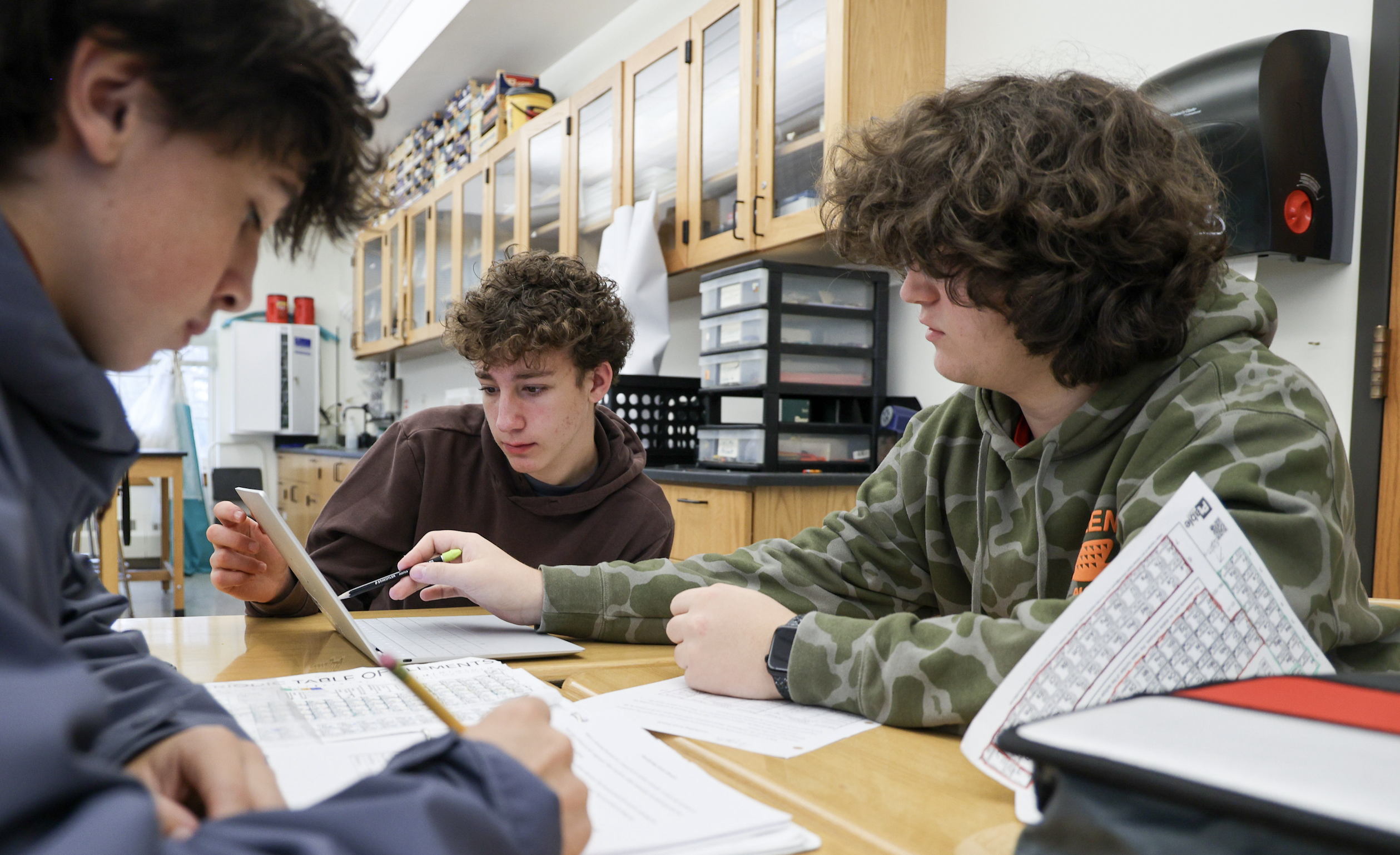
Morning Courses: Sciences
Biology
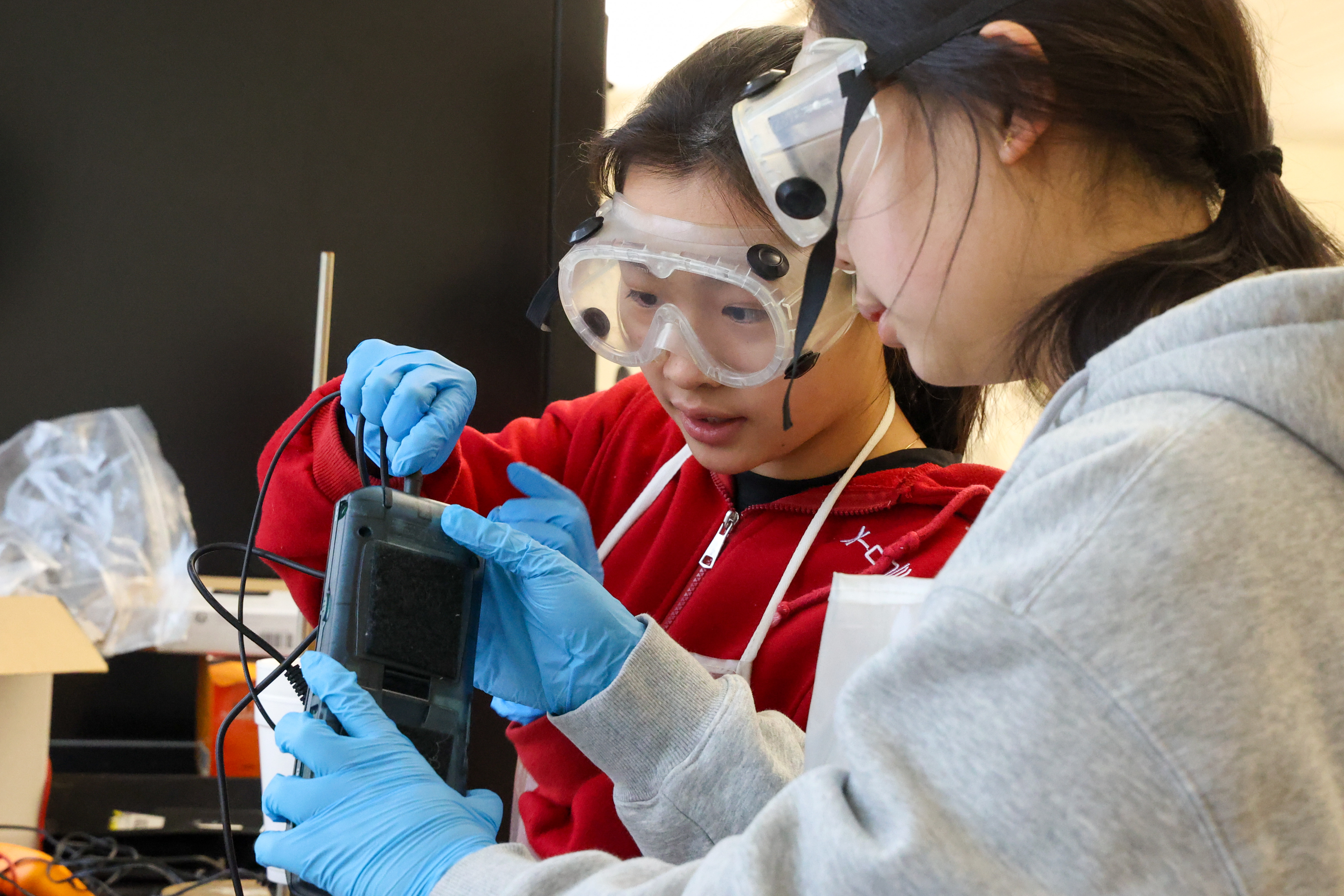
During the first two weeks of Biology, you will become familiar with the chemical structures within cells. The second two weeks emphasize the basic principles, terminology, and methodology of genetics. In the final week, you will study complex organisms and systems. How these systems work to maintain homeostasis (dynamic balance) and to respond to stresses placed upon them becomes the major emphasis by the end of the course. Throughout the course you will learn to use various methods of scientific investigation while collecting data, making careful observations, and interpreting results. You will also become familiar with working in a lab and using research instruments.
Chemistry
Chemistry deals with the myriad of substances that make up our environment, their relationships to each other, and their transformations. This course begins the study of chemistry by learning about the units of science, the manipulation of numbers in science, types of matter, and atomic theory. You will then master the symbols, formulas, and equations that make up the language of chemistry and explore the ways in which they are used. Kinetic theory, with particular application to the states of matter, lays the foundation for further investigation of thermodynamics, solutions, kinetics and equilibrium, acids and bases. At the end of the course, special topics are introduced. The laboratory plays an important role in this course; experiments are designed to teach the use of standard chemical equipment and procedures. Successful completion of Algebra II and Biology is a prerequisite.
Foundations of Engineering: Build It!
This project-based high school engineering course introduces students to the fundamentals of engineering practices, critical thinking, and building ingenuity. Through problem-based teaching and learning, students engage in hands-on activities to draw, model, design, and test prototypes in collaborative projects. Modern tools and technologies, such as VEX robotics, 3D printers, and microcomputers, are integrated into the coursework to enhance the engineering experience. Along the way, students explore foundational physics concepts, including Newton’s laws of motion, forces, energy, gravity, current electricity, and matter. By combining theory with practical application, this course builds foundational science skills and inspires a passion for engineering and innovation.
Intro to Computer Science: Beginner Python and C++ Programming Using AI
This introductory course explores the fundamentals of computer science, focusing on computers, algorithmic processes, and their principles, hardware and software design, applications, and societal impact. Leveraging the power of Artificial Intelligence (AI), students will enhance their programming skills by learning to collaborate effectively with AI to accelerate coding and problem-solving. Through hands-on projects using Raspberry Pis and Arduinos, students will apply their skills to create functional prototypes, such as coding light strips and stock tickers. The course provides a strong foundation in programming fundamentals, focusing on Python and C++. By the end of the course, students will confidently approach problems as programmers and be well-prepared for advanced high school computer science studies, with a deeper understanding of how AI integrates into programming workflows.
Physics
In this course, you will develop a thorough understanding of mechanics and the major conservation laws of energy and momentum. You will learn to apply these ideas to the workings of the universe, studying the principles of electricity, optics, and Newtonian mechanics. Through experiments and labs, you will learn to organize, manipulate, and summarize experimental data into charts, graphs, and tables; propose and justify a sequence of steps leading to a solution; and evaluate the advantages and disadvantages of a solution to a physics problem. Successful completion of Algebra II, Chemistry, and Trigonometry is a prerequisite for enrolling in Physics.
College Counseling Seminar
High School Students Only
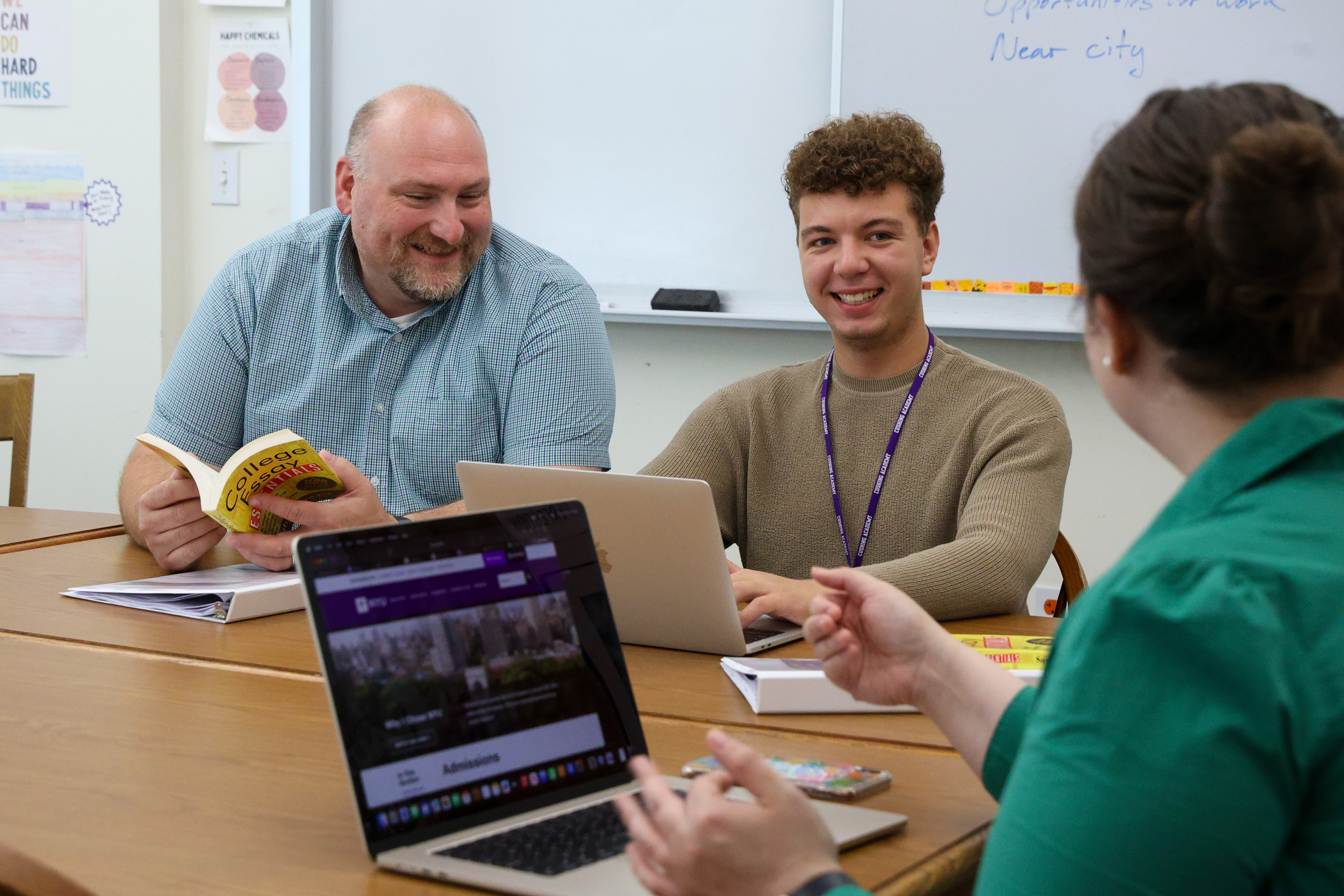
Led by Cushing Academy college counselors, students enrolling in College Counseling receive guidance on exploring, selecting and applying to U.S. colleges and universities. The program starts with learning basic tools and tips to get your search started in the right direction and ends with a personal roadmap for your college application process and a step-by-step plan to achieve your goals!
Among the many topics covered are:
- How to select the best schools for you
- How to start the application process
- How to show demonstrated interest
- How to write essays that get noticed
- How to apply for scholarships and financial aid
- How to get the most out of college tours
In addition to on-campus seminar meetings, students will have the chance to practice tour skills by visiting New England colleges.
The College Counseling Seminar takes place in the evenings and weekends. (It does not take the place of a morning course.) There is an additional fee of $485 to enroll in the seminar.
More Than 25 Afternoon Classes + Activities
Flickr album: Summer Session Photo | Height: 500px | Theme: Columns | Skin: Default Skin
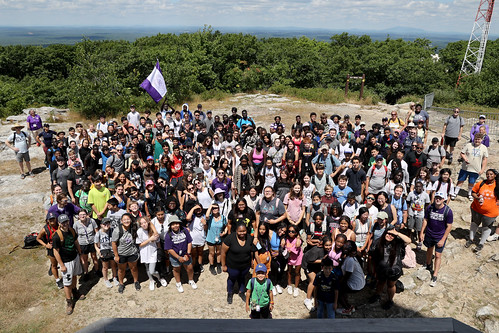
Afternoons at Cushing Summer are an opportunity to further explore your interests. We offer additional academic classes to sharpen skills or explore new subjects, performing and visual arts classes to find inspiration and flex creative muscles, and athletic workshops to keep fit and active.
College Prep Options, Too!
Looking ahead to college? Our afternoon programming also includes options for College Counseling with members of the Cushing College Counseling faculty as well as SAT and TOEFL preparation.
.png)
Questions? Connect With Our Director
Our Director of Summer Programs, Chris Roy, would love to connect with you! Send him an email at [email protected] or call (978) 827-7700.